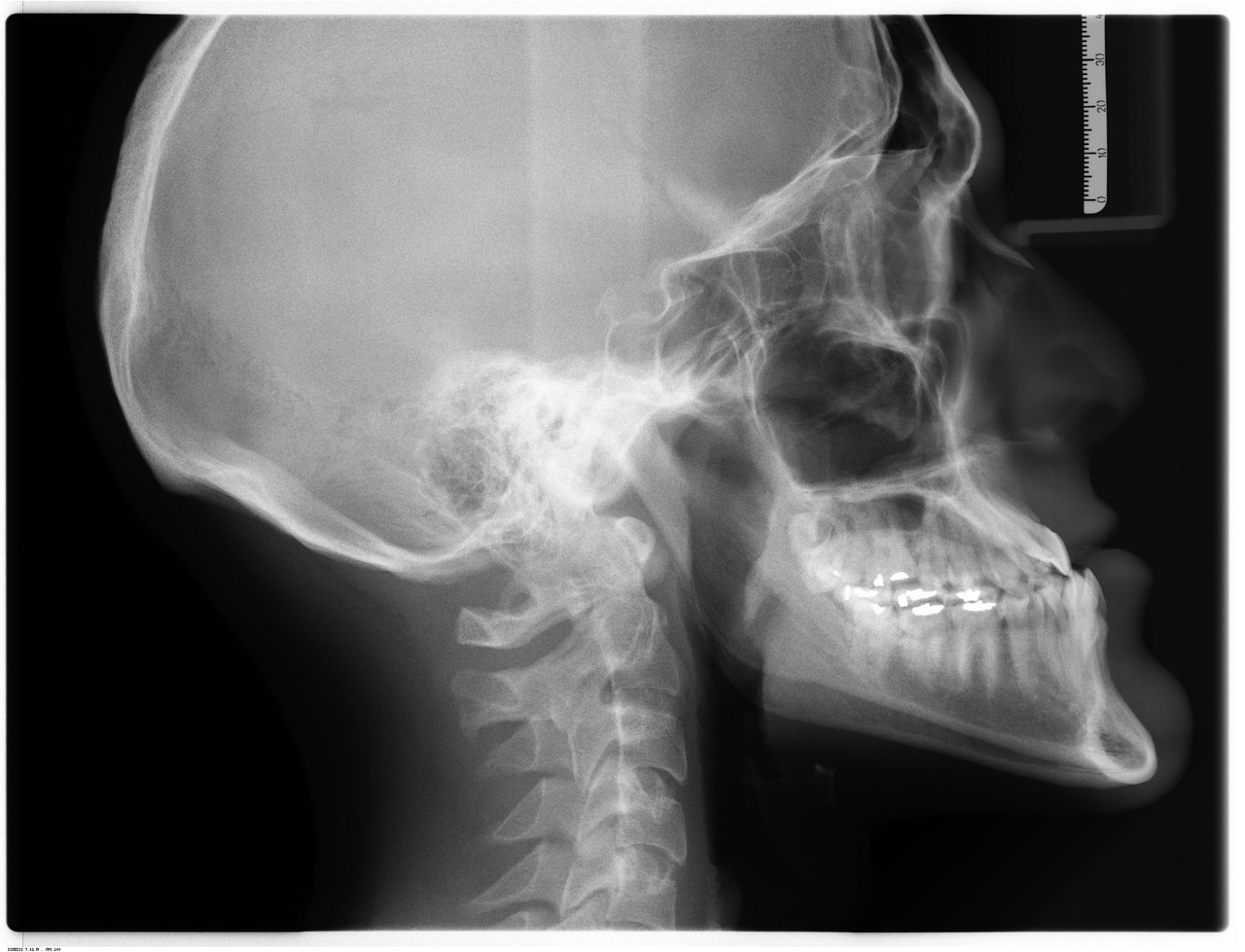
Artificial intelligence (AI) in medical imaging refers to computer algorithms – often machine-learning or deep-learning models – that automatically analyse diagnostic images (X‑rays, CT or MRI scans, etc.) for signs of disease. AI has rapidly moved from the research lab into healthcare practice: as one recent review notes, “AI has transitioned from the lab to the bedside, and it is increasingly being used in healthcare. Radiology…are on the frontline of AI implementation” thanks to the wealth of imaging data. In practice, AI tools can highlight suspicious areas (e.g. a lung nodule on a chest X‑ray), measure lesion size, or flag normal scans to help prioritise work. For example, UK researchers at Moorfields Eye Hospital developed an AI system to spot sight-threatening eye diseases from retinal scans. Such algorithms can sometimes even predict other health risks from images (the Moorfields “RETFound” model could detect heart disease or stroke risk from eye scans. In each case, the AI acts as a decision support tool: it provides a second opinion or triage based on image patterns that might be subtle or time-consuming for humans to detect.
How AI is Used in Medical Imaging
AI tools are being applied to a wide range of imaging tasks. They include:
- Emergency triage: In stroke care, AI analyses head CT scans to locate blockages. The Brainomix “e-Stroke” platform (developed in the UK) provides real-time decision support on brain scans, helping clinicians spot large vessel occlusions and decide on clot retrieval treatment (gov.uk, 2022) UK pilots show this can speed up care dramatically: one trial found e-Stroke cut the time from scan to treatment by over 60 minutes, reducing median hospital door-to-treatment time from 140 to 79 minutes.
- Cancer detection: AI can flag tumours or nodules on imaging. For instance, an AI tool from Annalise.ai is now deployed in dozens of NHS chest imaging networks to spot lung abnormalities on chest X‑rays. Annalise’s model can identify up to 124 different findings on a single X-ray, and in clinical use, it has shortened the average time to lung cancer treatment by about 9 days and increased early-stage detection by 27% (digitalhealth.net, 2024) Similarly, the NHS is testing AI in breast screening: a 2025 trial will have AI read two-thirds of the ~700,000 mammograms per year in England to compare its accuracy with radiologists (theguardian.com, 2025). If successful, AI could take over one of the two “readings” now done by human experts, potentially halving radiologists workload without missing cancers.
- Routine reports and prioritisation: Many radiology departments receive too many images for the available workforce. AI can triage normal vs abnormal cases. In Surrey, a pilot found an AI chest X-ray tool flagged “normal” scans with 99.7% accuracy (independent.co.uk, 2023) meaning radiologists can focus on complex cases. More generally, NHS trusts are using AI to automatically mark X-rays or CTs as “normal” or “urgent”. For example, Qure.ai’s chest X‑ray software is being trialled to pre-screen images – consultants estimate it could save them up to two hours per day by reducing routine reporting on clearly normal scans.
- Measurements and Quantification: AI can automatically segment organs or tumours. Some tools measure lung volumes, bone densities, or the size of brain bleeds. This makes follow-up more consistent and can save time (e.g. fully-automatic lung cancer screening CT analysis).
- Speciality-specific uses: Other examples include AI to analyse fetal scans, detect fractures on X-rays, or find subtle findings on MRI. At Moorfields Eye Hospital, the RETFound model was trained on 1.6 million NHS retinal images (moorfields.nhs.uk, 2023) and is now being shared worldwide (researchers in Singapore and China are already using it). AI has also been applied in radiotherapy planning (auto-contouring tumours on scans) and in pathology imaging.
In all these cases, AI is used alongside clinicians, not alone: it supports doctors by highlighting areas of concern, making measurements faster, or triaging workloads.
Benefits of AI in Medical Imaging
AI offers several clear advantages when deployed carefully:
- Faster and earlier diagnosis: By automating image interpretation, AI can speed up reporting. The stroke AI example above saw treatment begin over an hour sooner on average gov.uk. In cancer, early detection can improve survival: NHS data show Annalise’s chest X‑ray AI starts treatment 9 days earlier than usual (digitalhealth.net, 2024). Large screening programs can also get quicker reads: one UK project aims to shave hundreds of thousands of hours off cancer screening waits.
- Improved outcomes: Saving time has a real impact on patients. The Brainomix study noted a tripling in the proportion of stroke patients leaving the hospital with minor or no disability after AI was used (gov.uk, 2022). Faster diagnosis often means treatment (such as clot-busting or surgery) occurs before irreversible harm.
- Efficiency and workload relief: With staff shortages, radiologists are stretched thin. AI can tackle routine tasks or “easy” cases. For example, AI-based mammogram reading could free up half of the second-reader’s workload. The Qure.ai X-ray project highlighted how AI classifying 99.7% of normal chest images could save consultants hours of work every day (independent.co.uk, 2023). In short, AI can help match capacity to demand in an overburdened NHS.
- Consistency and sensitivity: Unlike a single radiologist, an AI algorithm applies the same criteria every time. It can be finely tuned to catch small abnormalities (in one study, AI detected tiny lung nodules that readers initially missed). This can reduce human oversight errors. A UK NHS pilot reported that chest X-ray AI led to 27% more cancers found at an early stage.
- Accessibility: AI could expand access to specialist-level interpretation in underserved areas (for instance, a GP could get an AI-read result when no radiologist is on site). Likewise, 24/7 AI support means emergencies can be reviewed faster, even off-hours.
Combined, these benefits mean patients get diagnoses faster and more reliably, while NHS staff can focus on complex cases and patient care instead of routine reporting.
Limitations and Challenges
Despite its promise, medical imaging AI faces significant hurdles:
- Data access and anonymisation: Effective AI needs lots of labelled images. Ironically, the NHS has vast archives of imaging data, but most are not in a usable form. As one data scientist put it, the NHS’s imaging “oil field” is largely Level D: unverified, unlabelled and un-anonymised, so it’s effectively inaccessible for AI (medium.com, 2017). In short, millions of scans exist, but patient-identifiable details and inconsistent record formats make them hard to share. Strict privacy rules (GDPR in the UK/EU) require robust de-identification. However, experts warn that even “anonymised” health data can often be re-identified by linking with other information (theguardian.com, 2025). Ensuring truly safe, anonymised data pipelines is complex. In practice, hospitals must use secure research environments or synthetic data generators, which slows down development.
- Bias and generalisability: If an AI model is trained on one population, it may not work well in others. For instance, a model trained on mostly white patients might underperform on ethnic minorities. The Moorfields RETFound team was specifically trained on London’s diverse population to avoid this pitfall. Similarly, trial designers explicitly note that AI must be tested to ensure “equally reliable results for different groups of women” in breast screening. Any bias (gender, age, ethnicity, device manufacturer) can lead to disparities. There have been cases internationally where algorithms missed fractures in certain groups or underdiagnosed skin cancer in darker skin – such issues erode trust and risk patient harm.
- Regulation and validation: AI tools must be thoroughly validated before clinical use. Currently, in the UK/EU, AI diagnostic software typically needs CE marking (like a medical device) to show it meets safety standards. This process can be lengthy. In the US, the FDA has already cleared hundreds of AI tools for imaging, but each had to show clinical performance (cardiovascularbusiness.com, 2025). In the UK, the NHS is setting up an AI Deployment Platform for radiology that will test and safely integrate approved models into the NHS IT systems. Until an algorithm is validated, radiologists must review its output rather than trust it outright.
- Interpretability and trust: Many AI algorithms are “black boxes”. If a model flags an image as suspicious, it’s not always clear why. Clinicians (and patients) may be uneasy relying on opaque systems. Therefore, part of responsible deployment is building trust – e.g. by having radiologists retrospectively audit AI decisions, or developing tools that highlight why a decision was made. Reports emphasise that ethical and transparent AI practices are essential: the NHS AI Lab has even created an AI ethics initiative to “translate AI principles into practice” and ensure safety and trust (researchgate.net, 2023).
- Workflow integration: Introducing AI isn’t plug-and-play. Hospitals need modern IT infrastructure to feed images into AI systems. Staff must be trained to use and interpret AI tools. There is also a cultural barrier: many clinicians fear over-reliance on algorithms (automation bias) or worry about liability if an AI system errs. Clear guidance, training and well-defined clinical pathways are needed before full rollout.
- Data annotation and quality: Developing AI requires labelled images (e.g. an expert must mark every tumour or fracture). This “annotation” is hugely labour-intensive. In practice, many datasets lack high-quality labels. Poor or inconsistent labels can degrade AI performance. The NHS and its partners are funding efforts to create clean, annotated datasets, but progress takes time.
In summary, medical imaging AI is powerful but also risky if data is sparse, biased or mishandled. Ensuring patient privacy and algorithmic fairness are as important as raw accuracy.
UK and NHS Initiatives
The NHS and UK government have taken active steps to harness imaging AI safely. In 2019, the NHS established the NHS AI Lab, with one remit to accelerate AI in imaging. The AI Lab’s “AI in Health and Care” awards have funded many pilot projects. For example, Brainomix’s e-Stroke (above) was supported by this fund. In 2023, NHS England announced a £21 million Diagnostic AI Fund specifically to deploy AI tools in imaging workflows across England. This has led to, for instance, Annalise’s chest X-ray tool being adopted by six major imaging networks (covering ~40 trusts) to improve early lung cancer diagnosis (digitalhealth.net, 2024). The government is also funding the nationwide breast screening AI trial noted above, the world’s largest.
Academic and clinical centres in the UK are also major contributors. Moorfields and UCL have led work on RETFound (eye scan analysis) (moorfields.nhs.uk, 2023). The National COVID-19 Chest Imaging Database (NCCID) was set up to support AI research on COVID lung scans. New consortia, like the London Medical Imaging & AI Centre (London AICentre), provide platforms where NHS trusts share anonymous images in secure environments.
Professional bodies are engaged too. The Royal College of Radiologists (RCR) and other colleges published a UK report (co‑chaired at 10 Downing Street in 2023) outlining steps to embed AI for early diagnosis. They emphasise that careful planning, data infrastructure and standards are needed for safe adoption. The British Standards Institute has even drafted a healthcare-specific AI validation standard (“BS 30440”) due in 2025. These efforts aim to ensure that any AI imaging tool is rigorously tested and clinically governed.
Overall, NHS stakeholders are balancing innovation with caution: pilot projects proceed, but always under oversight. The NHS AI Lab’s ethical framework and new regulatory pathways seek to put guardrails around AI in imaging.
International Perspective
The UK is not alone. Globally, medical imaging AI is a hot area: by late 2024, the US Food and Drug Administration had cleared over 750 AI algorithms for radiology applications (cardiovascularbusiness.com, 2025), making radiology the dominant field for AI tools. Many leading health systems (in the US, Europe, China and elsewhere) are using AI to screen X‑rays, CT scans, mammograms and more. For instance, a large Swedish trial of mammogram AI (reported in 2023) found results mirroring the UK’s plans: AI reading halved radiologists’ workload without more false alarms. European radiology societies (ESR, EuSoMII, and the European Federation of Radiographer Societies) have issued joint statements on AI ethics, urging mitigation of AI risks while promoting training of professionals. In practice, many NHS AI projects draw lessons from international experience. The open-source nature of some UK work (like RETFound being shared worldwide means global collaboration is feeding local innovation. Conversely, regulators in the UK keep an eye on the EU’s new AI Act and evolving FDA guidelines to align safety standards.
In summary, medical imaging AI is a global movement. The UK’s efforts – from piloting tools to shaping standards – are broadly in line with trends abroad. Many of the same caveats apply everywhere: AI can help diagnose and manage disease, but only if we handle data, bias and trust properly.
Looking Ahead
AI’s role in medical imaging is set to grow. Continued investment in data infrastructure and training will be key. The NHS is building “data refineries” (secure data platforms) so that future algorithms can safely access de-identified scans for research. At the same time, the education of clinicians in AI literacy is expanding: courses for radiologists and radiographers aim to make these tools familiar and trustworthy. Early results from UK trials have been encouraging (faster diagnoses, saved clinician hours and could translate into routine use over the next few years.
However, experts stress that AI should augment rather than replace human skill. As one UK leader put it, successful AI in healthcare requires “responsible and ethical practices…harmonious collaboration between different professional groups” (researchgate.net, 2023) The NHS AI Lab’s ethics initiative and new standards (e.g. BS 30440) are meant to ensure patient safety and public trust every step of the way.
In conclusion, AI is already improving medical imaging in the UK, making scans faster to interpret and catching diseases earlier, but realising its full potential depends on solving the privacy, data and practical hurdles. With careful oversight and continued collaboration between hospitals, universities and industry, the NHS aims to be a world leader in AI-enabled imaging, giving patients faster, more accurate diagnoses while keeping the care safe and ethical.